

Sustainability · 2025
In this section53 topics
- Sustainability Policy2 items
- Sustainability Goals & UN SDGs3 items
- Policy Review3 items
- Business Value Chain1 item
- Stakeholder Analysis2 items
- Environmental Sustainability — Overview1 item
- Environmental Policy & Guidelines3 items
- Environmental Policy Review1 item
- Energy — Plan & Guidelines2 items
- Energy — Electricity Consumption1 item
- Energy — Fuel Consumption1 item
- Energy — Targets2 items
- Energy — Performance & Outcomes2 items
- Water — Plan & Guidelines2 items
- Water — Withdrawal, Discharge & Consumption1 item
- Water — Targets2 items
- Water — Performance & Outcomes2 items
- Waste — Plan & Guidelines2 items
- Waste — Generation, Disposal & Recycling1 item
- Waste — Targets2 items
- Waste — Performance & Outcomes2 items
- GHG — Plan & Guidelines2 items
- GHG — Emissions1 item
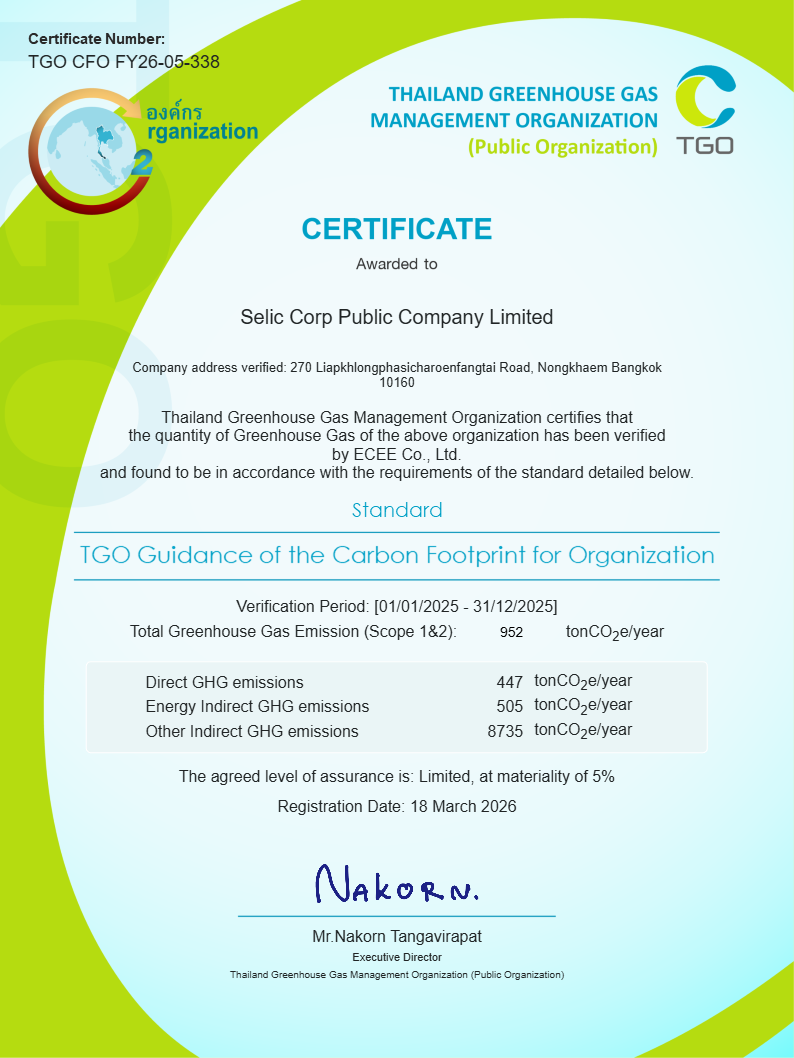
- GHG — Emissions Verification4 items
- GHG — Principles & Standards1 item
- GHG — Targets1 item
- GHG Targets — Net Zero1 item
- GHG Targets — Carbon Neutrality1 item
- GHG Targets — Other Targets1 item
- GHG — Performance & Outcomes2 items
- Environmental Legal Incidents1 item
- Other Environmental Management1 item
- Social Policy & Guidelines3 items
- Social Policy Review1 item
- Social — Principles & Standards Practised1 item
- Human Rights Due Diligence2 items
- Employees — Plan & Guidelines3 items
- Employees — Workforce2 items
- Employees — Remuneration & Provident Fund2 items
- Employees — Training & Development1 item
- Employees — Occupational Health & Safety1 item
- Employees — Labour Relations1 item
- Employees — Employee Representation2 items
- Employees — Targets2 items
- Employees — Performance & Outcomes2 items
- Customers — Plan & Guidelines3 items
- Customers — Satisfaction Results2 items
- Customers — Targets2 items
- Customers — Performance & Outcomes2 items
- Community & Social — Plan & Guidelines3 items
- Community & Social — Targets2 items
- Community & Social — Performance & Outcomes2 items
- Law Violation Incidents1 item
Sustainability Policy
Has a Sustainability Policy
Yes
Policy Description
The Company is committed to conducting business based on good corporate governance, with the goal of organizational sustainability, which creates shared value in economic, social, and environmental dimensions throughout the business chain. Therefore, the Company has established an organizational sustainable development policy to serve as a business guideline as follows:
Conduct business with honesty and fairness, adhere to laws and trade regulations, promote clarity and transparency in organizational management in accordance with international principles, including supporting anti-corruption efforts, preventing exploitation, and misuse of power, to create maximum and equitable benefits for stakeholders.
Promote adherence to human rights principles, considering human dignity, rights, freedoms, and equality of individuals protected by the Constitution of the Kingdom of Thailand and relevant international laws.
Focus on improving and developing work processes and service utilization throughout the value chain, in accordance with total quality management principles across the organization, to foster a quality mindset among personnel, leading to increased value for customers and long-term growth.
Promote efficient resource utilization, including reducing and controlling impacts on society and the environment, resulting from the company's business operations and related partners.
Prioritize occupational safety, health, and working environment for employees, partners, and visitors to prevent loss of life and property, as well as injuries or illnesses resulting from work.
Manage personnel fairly, prioritize the development of labor capabilities, and promote job satisfaction, which will lead to efficient organizational drive.
Promote innovation with social and environmental responsibility to enhance efficiency and effectiveness, as well as create value for the organization and stakeholders.
Create sustainable benefits for communities and society, while providing support and participating in activities for public benefit, and encouraging employees to have a good conscience towards the common good and social contribution.
Committed to comprehensive risk management to maximize opportunities for success and minimize the chances of failure or loss.
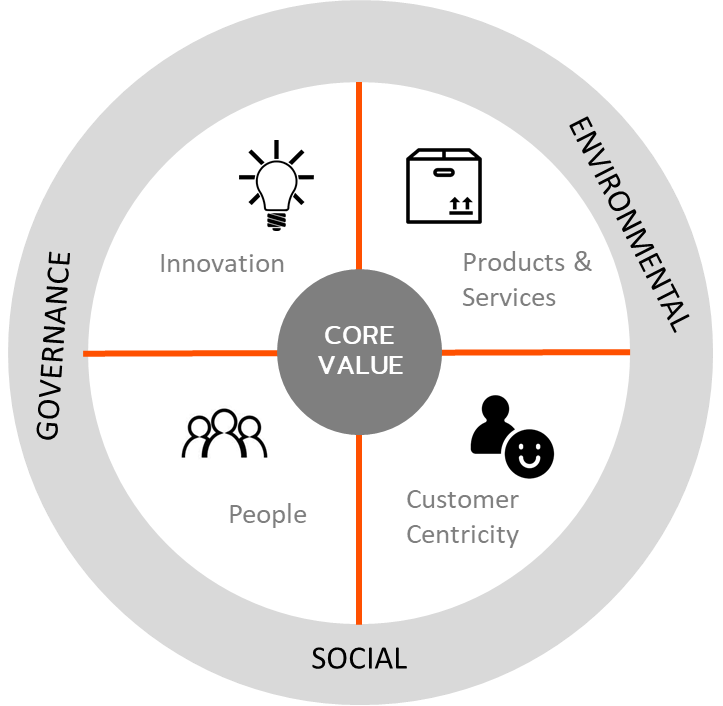
The Company has established a comprehensive sustainability policy and framework, with operational foundations that promote economic, environmental, and social dimensions as core principles. It focuses on four main strategies: personnel development, innovation, offering quality products and services, and providing excellent customer experiences, driven by corporate values within the three dimensions of the sustainability framework.
Sustainability Goals & UN SDGs
Has Sustainability Goals
Yes
Goals Description
The Company aims to conduct business according to good governance principles for sustainable growth. It adopts international standards and the United Nations Sustainable Development Goals (SDGs) as a development framework for establishing its sustainable development policy. This policy is formulated by analyzing relevant internal and external sustainability contexts, covering three dimensions: economic governance, social, and environmental. These have been defined as sustainable development strategies to deliver a good quality of life to all stakeholders.
Economic Dimension Strategy
Focus on strengthening the business by developing and improving operational efficiency and governance, as well as inviting customers and partners to understand and prioritize sustainability for collaboration and participation in sustainable development and growth.
Social Dimension Strategy
Deliver products with social, environmental, quality, safety, and occupational health responsibility, and assess policies and management guidelines to align with comprehensive Human Rights Due Diligence.
Environmental Dimension Strategy
Utilize resources sufficiently, reduce environmental impact, and decrease greenhouse gas emissions from business operations both internally (within the organization and products) and externally (e.g., partners, surrounding communities).
Sustainable Development Goals and Performance in 2025
Topic | Target | Indicators | Target Year | Performance Year 2025 |
Supply chain management to enhance customer satisfaction | Percentage of key partners who have signed to comply with the business's partner code of conduct | 100% | 2025 | 100% |
Percentage of the company's new partners screened for sustainability issues | 100% | 2025 | 100% | |
Satisfaction assessment results: Product quality and standards, delivery services, and sales and technical services | More than 85% | 2025 | 93.68% | |
Innovation and Product Development | Number of new environmentally friendly products or products that reduce greenhouse gas emissions | 1 product | 2025 | 3 products |
Occupational Health and Safety of Employees | Number of lost-time work injuries or incidents | 0 cases | 2025 | 2 cases |
Lost-time work injury rate (Lost Time Injury Frequency Rate: LTIFR) | 0 | 2025 | 1.43 | |
Management of Environment - Energy | Reduce electricity consumption rate | 5% compared to the 2021 baseline | 2026 | -12.02% |
Reduce water consumption rate | 10% compared to the 2021 baseline | 2026 | -15.79% | |
Reduce greenhouse gas emission rate | Reduce total greenhouse gas emission rate (Scope 1 and 2) 10% from 2020 baseline | 2026 | -15.44% | |
Management of Environment - Waste Management | Reduce the volume of waste sent to landfills | 3% compared to the 2021 baseline | 2026 | -21.60% |
Reduce hazardous waste volume | 3% compared to the 2024 baseline | 2026 | +76.88% | |
Reduce air pollution (VOCs) | Within standard limits According to | 2025 | Within standard limits |
UN Sustainable Development Goals
| SDG Goal |
|---|
| Goal 3 Good Health and Well-being |
| Goal 8 Decent Work and Economic Growth |
| Goal 9 Industry, Innovation and Infrastructure |
| Goal 12 Responsible Consumption and Production |
| Goal 13 Climate Action |
| Goal 15 Life on Land |
| Goal 16 Peace, Justice and Strong Institutions |
| Goal 17 Partnerships for the Goals |
Policy Review
Policy Reviewed This Year
Yes
Policy Changed This Year
Yes
Review Details
The Company reviews its sustainability management policies and goals annually to align with significant changing factors such as business growth, sustainability trends, and relevant laws and standards.
The Company prioritizes reducing greenhouse gas emissions from its business operations in all dimensions, both direct and indirect. Therefore, a concrete plan for greenhouse gas emission reduction has been developed, with implementation commencing in 2025.
For the short-term plan, the Company aims to reduce greenhouse gas emissions by at least 50% from the baseline level by 2037, while achieving Carbon Neutrality. Concurrently, in the long-term plan, the Company targets Net Zero Emissions from all business activities by 2065.
Business Value Chain
Value Chain Description
The Company is committed to conducting business to drive its vision of delivering "Bonding Innovation for Better Living" alongside its mission to "Improve quality of life and enrich well-being of stakeholders through being responsive, innovative and collaborative, with responsibility for the social and environment."
The Company recognizes that the procurement and partner management process is a crucial mechanism for supporting business operations, especially in sustainable supply chain management. To ensure that these processes are tangible, the company prioritizes transparent, fair, and auditable procurement and partner management, which helps build trust among all stakeholder groups.
The Company places importance on managing the entire business value chain, from upstream to downstream, to create value for products and services and meet stakeholder expectations. This includes procurement from raw material suppliers, environmentally friendly production that considers community impact, marketing, sales, and the timely and accurate delivery of standard products that meet customer needs.
Selic's Value Chain begins with key inputs, namely raw materials from various suppliers and service providers, coordinated through the Company's procurement department to support efficient production processes and operations, resulting in products that meet specified requirements. These products undergo quality inspection processes before delivery to customers.
The processes that are part of the Company's internal supply chain include sourcing and procurement, production, and delivery. The Company reviews the impacts on stakeholders in all processes and establishes guidelines to create value and generate positive impacts for all stakeholder groups sustainably.
Sustainability goals through supply chain management. | |||
|
|
|
|

Stakeholder Analysis
Introduction
The Company prioritizes the analysis and management of key internal and external stakeholders involved in its business value chain. This is achieved by focusing on stakeholder engagement through open communication processes to listen to opinions, suggestions, and to appropriately reflect their needs and expectations regarding the Company's operations.
The Company conducts its business with responsibility towards all stakeholder groups under a clear sustainable development framework. It identifies the organization's material sustainability topics based on the consideration of internal and external factors, along with the expectations of stakeholders throughout the business value chain. The Company has reviewed and categorized stakeholders into 7 groups: employees, customers, business partners, communities and society, shareholders, government agencies, and standard organizations, and has identified the needs, expectations, and response plans for each stakeholder group.
Stakeholder Analysis
| Stakeholder Type | Stakeholders | Stakeholder Expectations | Response to Expectations | Communication Activities |
|---|---|---|---|---|
| Internal stakeholders | 2921 · Description: Employees | -Equal and fair treatment
- Promotion of career advancement and growth
- Assignment of appropriate workload - Appropriate compensation and welfare system - Safe, hygienic, and convenient working environment | - Clear guidelines and codes of conduct
- Management of wages and benefits comparable to market and industry standards - Establishment of career paths to develop employee potential
- Fostering a safe and hygienic work environment conducive to work, in accordance with occupational health standards
- Promotion of communication between supervisors and at the organizational level | 2941 · Description: Online Communication · 2942 · Description: Internal Meeting · 2945 · Description: Complaint Reception · 2946 · Description: Employee Engagement Survey · 2948 · Description: Training / Seminar · 2949 · Other name: Town Hall Activity · Description: Others |
| External stakeholders | 2923 · Description: Customers | - Products that meet requirements
- Products consistently meet quality and functional specifications.
- Environmentally friendly products that help reduce greenhouse gas emissions.
- Prompt service and professional customer support.
- Delivery of goods and services on time and in full.
- Clear communication in operations or problem-solving within a reasonable timeframe.
- Providing consultation or advice that adds value to products and services. | - Inventing and developing products that meet customer needs and applications
- Offering products that enhance efficiency, ease of use, and reduce energy consumption
- Managing customer relationships through service and sales teams
- A customer care team structure comprising specialized experts
- Internal systems and coordination to verify product items and quantities against customer orders
- Providing knowledge and understanding of the importance of sustainability and environmentally friendly products | 2938 · Description: Visit · 2941 · Description: Online Communication · 2945 · Description: Complaint Reception · 2947 · Description: Satisfaction Survey · 2948 · Description: Training / Seminar · 2949 · Other name: Customer visits and after-sales service by the technical team · Description: Others |
| External stakeholders | 2899 · Description: Suppliers | - Transparent and fair procurement practices
- Fair treatment and management of business partners
- Greater collaboration in product development, with clear communication toward sustainability (ESG) initiatives
- Accurate forecasting to enable efficient and timely sourcing/procurement of raw materials
- Income stability and timely payments
- Collaborative development and continuous improvement of product quality
- Provision of a suitable and safe working environment, including adequate parking and waiting areas, as well as personal protective equipment (PPE) | - Transparent, fair, and auditable procurement processes
- Development of a supplier code of conduct and guidelines aligned with ESG sustainability principles
- Arrange for communication and updates on environmentally friendly raw materials in order to improve existing materials or identify alternative materials that can be used according to the intended objectives.
- Preparation of contracts clearly defining scope of work and compensation, with a structured and timely payment system
- Strengthening collaboration with business partners to enhance product quality and implement sustainability (ESG) initiatives
- Establishment of clear delivery schedules and systematic management of parking/waiting areas, including the provision of appropriate personal protective equipment (PPE) | 2941 · Description: Online Communication · 2943 · Description: External Meeting · 2945 · Description: Complaint Reception · 2948 · Description: Training / Seminar · 2949 · Other name: Partner Assessment and Verification · Description: Others |
| External stakeholders | 2902 · Description: Community | - No adverse impact from operations on the community
- Development of nearby communities in environmental, economic, and social aspects
- Strengthening community relations with the organization
- Community and social assistance | - Plan and organize community relations activities
- Community employment - Implement operational processes that do not cause pollution impacts on the community and society
- Implement projects in collaboration with neighboring communities | 2938 · Description: Visit · 2940 · Description: Social Event · 2941 · Description: Online Communication · 2943 · Description: External Meeting · 2945 · Description: Complaint Reception · 2947 · Description: Satisfaction Survey |
| External stakeholders | 2913 · Description: Shareholders | - Good and consistent return on investment - Accurate and sufficient disclosure of information - Transparency in corporate governance - Business plan with sustainable growth - Uninterrupted business operations - Measures to cope with epidemic situations and crisis management | - Has a good corporate governance policy
- Has short-term and long-term business and strategic plans
- Ensures continuous and equitable disclosure of information to all stakeholders
- The company manages according to its business continuity plan | 2939 · Description: Press Release · 2941 · Description: Online Communication · 2944 · Description: Annual General Meeting (AGM) · 2945 · Description: Complaint Reception · 2949 · Other name: Company's website · Description: Others |
| External stakeholders | 2931 · Description: Government agencies and Regulators | Strict compliance with various rules and regulations related to business operations in accordance with legal provisions. | - Comply with laws and regulations, or exceed specified requirements
- Monitor changes in relevant laws, regulations, and requirements | 2943 · Description: External Meeting · 2945 · Description: Complaint Reception · 2948 · Description: Training / Seminar |
| External stakeholders | 2934 · Description: Standard organization | Provide prompt cooperation in information disclosure and support the agency's projects. Comply with prescribed standards. | - Operations and compliance with criteria established by various standard systems
- Communicate and foster understanding within the organization regarding participation in compliance with criteria | 2943 · Description: External Meeting · 2945 · Description: Complaint Reception · 2949 · Other name: Standard System Certification Audit · Description: Others |
Environmental Sustainability — Overview
Operating Results — Introduction
The Company prioritizes systematic environmental management, which includes continuous evaluation, hazard and risk analysis, as well as monitoring, inspection, and assessment. This ensures that environmental operations are efficient and comply with relevant standards. Furthermore, the Company promotes the participation of employees at all levels to elevate environmental management standards and to monitor risks that may arise from climate change, with appropriate risk management plans in place to ensure business continuity.
The Company is committed to preventing and mitigating both direct and indirect environmental impacts, thereby avoiding pollution or nuisance to surrounding communities and society. This includes addressing issues such as odors, noise, smoke, and waste management that could affect soil, natural water sources, and the broader ecosystem. For this reason, the company has developed concrete pollution control and environmental management plans, which involve continuous regular environmental inspections. Furthermore, it has implemented the ISO 14001:2015 environmental management system in its operations and has received Green Industry certification Level 4 from the Department of Industrial Works.
In terms of product development, The Company operates driven by innovation through Research and Development (R&D) to create new environmentally friendly products without compromising product performance. Under the guidance of a specialized and experienced R&D team, the company has clearly defined a sustainable development policy in the environmental dimension. This has led to the concept of developing Bio-based adhesive products made from natural raw materials, which can meet adhesion requirements while being environmentally friendly. This project is one of the New Product Development Projects that the company has developed to the prototype stage. The Company is committed to continuously developing other types of environmentally friendly products to support business growth alongside sustainable environmental and social responsibility.
Environmental Policy & Guidelines
Has an Environmental Policy
Yes
Policy Description
The Company recognizes the importance of environmental stewardship to prevent and take responsibility for potential impacts arising from its operations, both within and outside its premises. The company has established policies on quality, safety, occupational health, and environment to promote the development of production processes and the creation of innovations that reduce environmental impacts. Furthermore, it has prepared various measures to ensure the most efficient use of resources.
The Company has been certified with the ISO 14001:2015 environmental management system standard, which reflects its systematic and clear environmental practices. Furthermore, the company has established corporate-level environmental sustainability strategies as an integral part of its business operations, setting concrete targets for energy management, waste management, and greenhouse gas emission reduction.
The Company prioritizes climate change issues and is prepared to address environmental regulations that may impact its operations and stakeholders. The company has set a long-term goal to enhance greenhouse gas management by participating in projects and registering its management system with the Thailand Greenhouse Gas Management Organization (Public Organization). Additionally, it is pursuing certification for its Organizational Carbon Footprint (CFO) and Product Carbon Footprint (CFP) to support sustainable business operations.
Environmental Guidelines
| Guideline |
|---|
| Electricity Management |
| Fuel Management |
| Water Management |
| Waste Management |
| Greenhouse Gas and Climate Change Management |
| Air Quality Management |
Environmental Policy Review
Policy Reviewed This Year
No
Energy — Plan & Guidelines
Has an Energy Management Plan
Yes
Plan Description
The Company prioritizes efficient and valuable energy management by aiming to reduce unnecessary energy consumption, alongside reducing the impact.
impact on the environment and support the use of environmentally friendly energy to align with the organization's sustainable development guidelines.
The Company has established an energy management plan covering key activities in all operational processes, focusing on efficient and valuable energy utilization, alongside reducing environmental impact, to support the organization's sustainable development. This energy management plan emphasizes improving energy efficiency in production processes and utility systems through the implementation of appropriate technologies and innovations, as well as promoting energy conservation awareness among all employees and encouraging their participation in efficient energy use.
The Company aims to continuously develop and implement energy management projects to enhance resource efficiency, reduce operational costs, and support long-term sustainable growth.
Energy — Electricity Consumption
Electricity Consumption
| Metric | Current Year | Previous Year | Two Years Ago |
|---|---|---|---|
| Total electricity consumption within the organization (Kilowatt-Hours) | 1,062,752 | 1,085,246 | 1,089,015 |
| Electricity purchased for consumption from non-renewable energy sources (Kilowatt-Hours) | 1,062,752 | 1,085,246 | 1,089,015 |
| Electricity purchased or generated for consumption from renewable energy sources (Kilowatt-Hours) | 0 | 0 | 0 |
Energy — Fuel Consumption
Fuel Consumption
| Metric | Current Year | Previous Year | Two Years Ago |
|---|---|---|---|
| Jet fuel (Litres) | 0 | 0 | 0 |
| Diesel (Litres) | 54,064 | 51,826 | 51,276 |
| Gasoline (Litres) | 28,990 | 35,262 | 29,234 |
| Fuel oil (Litres) | 0 | 0 | 0 |
| Crude oil (Barrels) | 0 | 0 | 0 |
| Natural gas (Standard cubic feet) | 0 | 0 | 0 |
| LPG (Kilograms) | 71,697 | 63,624 | 60,945 |
| Steam (Metric tonnes) | 0 | 0 | 0 |
| Coal (Metric tonnes) | 0 | 0 | 0 |
Energy — Targets
Has Set Targets
Yes
Targets
| Target | Base Year | Base Year Value | Target Year | Target Year Value | Target Change (%) | Unit |
|---|---|---|---|---|---|---|
| Reduction of electricity purchased for consumption | 2,021 | 1,448,000 | 2,026 | 72,400 | 5 | Kilowatt-hour |
Energy — Performance & Outcomes
Has Performance Results
Yes
Performance Description
Environmental and Energy Management Projects implemented in 2025 and continuous action plans extending to 2032.
The Company has consistently implemented projects focused on energy management, efficient resource utilization, and environmental impact reduction. These initiatives encompass production processes, utility systems, and facilities. Key projects include the following:
Resource Utilization and Water Management Projects
Project to reduce tap water consumption by utilizing water from the company's internal canal system for plant irrigation
Water system management within the company and installation of water treatment systems
Air Pollution, Dust, and Odor Control Projects
Installation of a Dust Collector to capture and reduce dust generated from the rubber grinding process, which is integral to solvent adhesive production.
Installation of a Wet Scrubber to capture and reduce vapors and odors emanating from the SVBA production process in the production tanks, thereby mitigating air pollution and preventing complaints from surrounding communities.
Installation of an Acoustic Enclosure for the CT-210 glue cutting machine (Mixer MT-210) to mitigate noise pollution from the cutting and packaging process and reduce dust dispersion.
Installation of a cyclone system for the BC-201 glue filling line (HMA: High Viscosity) to control moisture and contamination quality, while simultaneously reducing noise and dust pollution, in conjunction with the sound attenuation enclosure of the CT-210 machine.
Projects for Energy Efficiency Enhancement and Greenhouse Gas Reduction
Overhaul of the entire Cooling Tower system for SVBA and HMA product manufacturing to enhance operational efficiency, reduce energy consumption, and decrease greenhouse gas emissions.
Project for replacing fluorescent lamps with LED lamps and/or Solar Cell systems within the company and along the factory perimeter (ongoing project).
Installation of reflector luminaires in previously unequipped areas to enhance lighting efficiency and reduce the number of light sources utilized.
Installation of Inverters to control and adjust the rotational speed of motors in production tanks, thereby reducing energy consumption and extending the operational lifespan of electric motors.
Modification of the Water & Air Chiller System for SVBA, WBA, and HMA product manufacturing processes, opting for compressors utilizing R-32 (C172) refrigerant instead of R-22, thereby enhancing cooling efficiency and reducing greenhouse gas emissions.
Conversion of the Steam Boiler from diesel fuel to LPG gas to enhance combustion efficiency and reduce greenhouse gas emissions and other pollutants.
Improvement of insulation for the cooling water pipeline system to enhance cooling efficiency, extend the operational lifespan of the Chiller system, and reduce the use of refrigerants with high Emission Factors, consequently reducing greenhouse gas emissions.
Safety and Environmental Projects in Production Processes
Conversion of production tank motors and glue filling pump motors to entirely explosion-proof motors for the SVBA product manufacturing process to enhance operational safety.
Organizational Energy and Resource Consumption Data
The Company systematically monitors and manages internal energy and resource consumption, utilizing energy intensity per unit of production as a key metric for continuous evaluation of production process efficiency. The operational results are summarized as follows:
Items | Unit | 2023 | 2024 | 2025 |
|---|---|---|---|---|
Electricity Consumption per Unit of Production (Electricity Intensity) | Unit per Production Output (ton) | 184.95 | 180.36 | 167.96 |
Energy Consumption per Unit of Production (Energy Intensity) | Unit per Production Output (ton) | 23.93 | 25.05 | 24.46 |
Water — Plan & Guidelines
Has a Water Management Plan
Yes
Plan Description
As water is one of the key components of waste generated from the factory's operational processes, the Company has improved its water segregation and management system in 2025 to enhance the efficiency of integrated waste management and ensure strict compliance with environmental regulations.
The Company has classified water into 3 types and established appropriate management guidelines as follows:
Wastewater
Refers to unused tap water that flows through the company's central water supply pipeline system. The Company has systematic procedures for controlling and monitoring wastewater management, from storage and volume control to discharge outside the factory, by correctly following relevant methods and regulations to prevent environmental impact.Water for consumption and general use
Refers to water generated from internal company use, such as factory buildings, offices, restrooms, and canteens. Water from general use is collected and conveyed to the factory's internal wastewater treatment system. Once the water has been treated to meet standards, it is reused for purposes such as cleaning factory areas or watering plants, to reduce tap water consumption and promote efficient resource utilization.Wastewater from production processes
Refers to chemically contaminated water, which is classified as hazardous waste. It originates from various activities such as production processes, cleaning production vessels, washing containers and equipment, as well as water from laboratories and quality control department areas. This type of wastewater is collected and stored in tightly sealed containers at designated points and then sent for disposal by service providers legally authorized by the Department of Industrial Works.
The improvement of this water management system reflects the company's commitment to operating its business with environmental responsibility, reducing pollution risks, and promoting efficient and sustainable resource utilization.
Water — Withdrawal, Discharge & Consumption
Water Withdrawal, Discharge & Consumption
| Metric | Current Year | Previous Year | Two Years Ago |
|---|---|---|---|
| Total water withdrawal (Cubic meters) | 5,427 | 7,272 | 7,193 |
| Total water withdrawal by third-party water (Cubic meters) | 5,427 | 7,272 | 7,193 |
| Total water withdrawal by surface water (Cubic meters) | |||
| Total water withdrawal by groundwater (Cubic meters) | |||
| Total water withdrawal by seawater (Cubic meters) | |||
| Total water withdrawal by produced water (Cubic meters) | |||
| Percentage of wastewater treated before discharge (%) | |||
| Total water discharge (Cubic meters) | |||
| Total water discharge to third-party water (Cubic meters) | |||
| Total water discharge to surface water (Cubic meters) | |||
| Total water discharge to groundwater (Cubic meters) | |||
| Total water discharge to seawater (Cubic meters) | |||
| Total water consumption (Cubic meters) | 5,427 | 7,272 | 7,193 |
| Recycled water (Cubic meters) |
Water — Targets
Has Set Targets
Yes
Targets
| Target | Base Year | Base Year Value | Target Year | Target Year Value | Target Change (%) | Unit |
|---|---|---|---|---|---|---|
| Reduction of water withdrawal | 2,021 | 7,726 | 2,026 | 772.6 | 10 | Cubic meters |
Water — Performance & Outcomes
Has Performance Results
Yes
Performance Description
The Company has established a systematic water segregation and management system, categorizing water into three main types with appropriate control and management guidelines, as follows:
Rainwater
Rainwater flowing through the factory area will have its drainage direction controlled and undergo initial quality inspection before being discharged into the public drainage system, to ensure no environmental impact.Used Water (Water from consumption)
Water generated from use within office buildings, factories, restrooms, and canteens will be collected into the factory's wastewater treatment system. Once the water has been treated to meet standard criteria, it will be stored for reuse, such as for cleaning and watering plants, to reduce tap water consumption and enhance resource efficiency.Wastewater (from production process)
Water contaminated with chemicals from production processes, equipment washing, containers, and laboratories will be separately stored in standard, tightly sealed containers. It will then be sent for disposal by a legally authorized waste disposal contractor approved by government agencies, as it is classified as hazardous waste.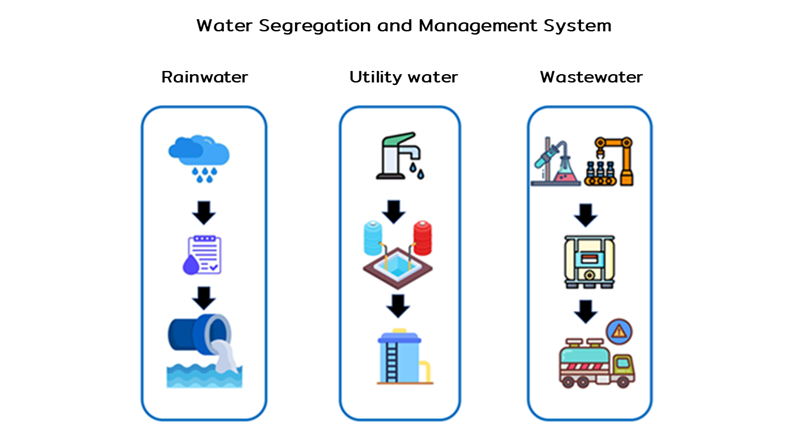
Furthermore, in 2025, the Company organized an energy-saving campaign media design competition to encourage employees to recognize the importance of efficient resource utilization, focusing on water and electricity conservation within the factory and office premises.
This activity provided an opportunity for employees to participate in creating concepts and designing public relations media, which received significant interest and positive feedback, reflecting the collaboration and environmental consciousness of the personnel within the organization.
Examples of award-winning energy-saving campaign media for the year 2025.
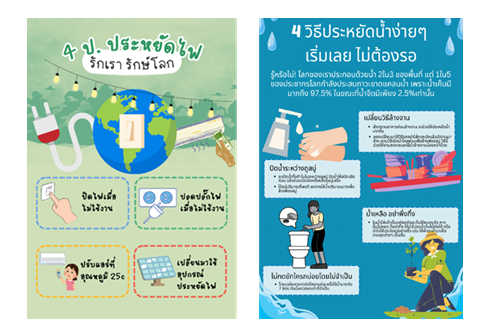
This activity is considered another approach to fostering an organizational culture of efficient energy consumption and continuously supporting the Company's environmental operations.
Waste — Plan & Guidelines
Has a Waste Management Plan
Yes
Plan Description
The Company prioritizes the management and control of waste generated from production processes and internal activities to ensure that all types of waste are managed correctly and appropriately. This includes steps from disposal, storage, segregation, and transportation, up to final disposal or sale to authorized buyers or waste disposal contractors. All operations strictly adhere to academic principles, laws, regulations, and relevant requirements to control risks and mitigate pollution impacts on the environment and health.
The Company continuously focuses on reducing the amount of waste from production processes that requires landfill disposal, with the exception of certain types of waste for which appropriate technology or management methods are not yet available. Emphasis is placed on minimizing waste generation at the source and considering waste management methods based on the potential of each waste type to ensure that resources can be utilized most cost-effectively and efficiently.
Additionally, the Company has adopted waste management guidelines based on the 3R principles, namely resource reduction (Reduce), reuse (Reuse), and recycling (Recycle), and systematically applied them to its operational processes to support efficient resource utilization, reduce environmental impact, and promote long-term sustainable business operations.
Waste — Generation, Disposal & Recycling
Waste Generation, Disposal & Recycling
| Metric | Current Year | Previous Year | Two Years Ago |
|---|---|---|---|
| Total waste generated (Kilograms) | 64,354.72 | 38,199 | 22,376 |
| Non-hazardous waste (Kilograms) | 6,922.72 | 5,729 | 3,293 |
| Non-hazardous waste - Landfilling (Kilograms) | 5,290 | 4,921 | 3,293 |
| Non-hazardous waste - Incineration (with energy recovery) (Kilograms) | 1,632.72 | 808 | |
| Non-hazardous waste - Incineration (without energy recovery) (Kilograms) | |||
| Non-hazardous waste - Other disposal operations (Kilograms) | |||
| Hazardous waste (Kilograms) | 57,432 | 32,470 | 19,083 |
| Hazardous waste - Landfilling (Kilograms) | 933 | 1,300 | 2,558 |
| Hazardous waste - Incineration (with energy recovery) (Kilograms) | |||
| Hazardous waste - Incineration (without energy recovery) (Kilograms) | 56,499 | 31,170 | 16,525 |
| Hazardous waste - Other disposal operations (Kilograms) | |||
| Total reused/recycled waste (Kilograms) | 24,726 | 14,908 | 20,030 |
| Reused/Recycled non-hazardous waste (Kilograms) | 24,726 | 14,908 | 20,030 |
| Reused non-hazardous waste (Kilograms) | |||
| Recycled non-hazardous waste (Kilograms) | 24,726 | 14,908 | 20,030 |
| Reused/Recycled hazardous waste (Kilograms) | |||
| Reused hazardous waste (Kilograms) | |||
| Recycled hazardous waste (Kilograms) |
Waste — Targets
Has Set Targets
Yes
Targets
| Waste Type | Disposal Approach | Target | Base Year | Base Year Value | Target Year | Target Year Value | Target Change (%) | Unit |
|---|---|---|---|---|---|---|---|---|
| Non-hazardous waste | 2760 · Description: Landfilling | Reduce waste volume | 2,021 | 360 | 2,026 | 10.8 | 3 | Kilograms |
| Hazardous waste | 2762 · Description: Incineration without energy recovery | Reduce waste volume | 2,024 | 29,370 | 2,026 | 881.1 | 3 | Kilograms |
Waste — Performance & Outcomes
Has Performance Results
Yes
Performance Description
Hazardous Waste Disposal
Hazardous Waste refers to dangerous waste or industrial waste, including wastewater generated from production processes, or disused materials that are flammable, corrosive, highly reactive, contain toxic substances, have degraded solvents, or sludge generated from production processes.
The Company has engaged legally authorized hazardous waste disposal contractors to manage disposal, strictly adhering to the Ministry of Industry's announcement regarding the disposal of waste or disused materials. This is to control risks, reduce environmental and health impacts, and support safe and sustainable business operations.
Wastewater Quality Management
Wastewater refers to water generated from the use by employees within factory buildings, offices, and canteens, as well as general wastewater such as rainwater or unused tap water, which is treated to reduce contamination before discharge into the environment.
The Company conducts annual inspections and monitoring of wastewater quality by engaging specialized external environmental measurement service providers to ensure that wastewater quality complies with legally mandated standards. The wastewater quality must not exceed the standard values stipulated in the Ministry of Industry's announcement regarding the control standards for wastewater discharge from factories B.E. 2560 (2017).
Non-Hazardous Waste Management
The Company manages non-hazardous waste according to the 3R waste management principles: Reduce, Reuse, and Recycle. This is coupled with educating and raising awareness among employees about proper waste segregation. Training sessions are organized annually for employees, including during the onboarding process for new employees. All employees are responsible for segregating waste before disposing of it in communal bins.
The Company has established a waste segregation system using color-coded bins as symbols to ensure convenience and clarity in practice. This system covers general waste, recyclable waste, orphan waste, and hazardous waste, with appropriate management guidelines for each type, including collection, transportation, and disposal or reuse. This operation helps reduce the amount of waste sent to landfills, increases efficient resource utilization, and concretely reduces environmental impact.
Orphan Waste Disposal
Orphan Waste refers to uncontaminated waste generated from daily routines that is difficult to very difficult to decompose, such as plastic food bags, food containers, plastic spoons and forks, paper cups, snack wrappers, and other similar materials.
The Company manages orphan waste by requiring it to be cleaned and dried to prevent contamination before collection and transfer to authorized agencies for processing into Refuse Derived Fuel (RDF), which can be used for electricity generation or as an alternative energy source. This operation helps reduce the amount of waste sent to landfills and supports efficient and environmentally friendly resource utilization.
The Company has participated in the orphan waste segregation project with Nong Khaem District Office. Employees received training from expert lecturers from the Environmental Research Institute, Chulalongkorn University, to enhance their knowledge and understanding of correct and efficient orphan waste segregation.
The Company has initiated the implementation of “Orphaned Waste Project” within the organization, with the following key operational guidelines:
Continuously communicate and promote knowledge on orphan waste segregation to employees through Town Hall meetings and internal communication channels, such as the Company's Line Group.
Improved the waste collection facility and disposal points within the company premises by clearly demarcating areas and assigning colors to waste bins to facilitate and reduce confusion in segregation.
Established a responsible team to collect and verify waste segregation data monthly to monitor employee understanding and evaluate operational performance to achieve the target of 100% correct waste segregation.
As a result of this project, the Company was able to deliver 1,633 kilograms of orphan waste to the Nong Khaem District Office for processing into Refuse Derived Fuel (RDF), which can be used for electricity generation or as an alternative energy source. This helps reduce the amount of waste sent to landfills and supports valuable and sustainable resource utilization.
Recyclable Waste Management
Recyclable Waste refers to waste that can be reused or sold, such as scrap metal, glass bottles, aluminium, drinking water bottles, and paper. The Company has assigned the Human Resources department to be responsible for collecting recyclable waste from various departments within the factory and coordinating its delivery to authorized contractors for proper recycling.
The Company has continuously organized activities and internal communications to impart knowledge and foster understanding among employees regarding proper waste segregation. This ongoing effort since 2022 aims to reduce wasteful resource consumption, decrease the amount of waste requiring disposal, and mitigate environmental impacts resulting from inefficient resource use.
The aforementioned waste and waste management approach is part of the Company's commitment to efficient resource utilization, reducing environmental impact, and supporting sustainable long-term business operations.
"Turning Waste into Merit" Project in collaboration with Wat Chak Daeng
The Company has supported the "Turning Waste into Merit" project, which involves processing clear PET plastic bottles through the process of Upcycling to create new value from waste materials. 15 PET plastic bottles can be used to produce fibers for weaving one monastic robe (Pha Trai Jiworn), and a complete set of monastic robes requires 60 plastic bottles.
The production process begins with sending plastic bottles to a recycling plant to be processed into fibers, which are then sent to a weaving factory. The recycled fibers are blended with Polyester Rayon fibers, cotton fibers, and Polyester Zinc Antibacterial fibers, which have properties that help reduce bacterial accumulation, eliminate odors, provide softness, offer good ventilation, and are suitable for Thailand's climate.
Once the fabric is woven from recycled fibers, it will be sent back to Wat Chak Daeng, where volunteers will collectively sew it into monastic robes (Pha Trai Jiworn or Pha Bangsukula Jiworn) for devotees to make merit. This also generates income for the surrounding community.
This project not only helps reduce plastic waste and promotes efficient resource utilization but also instills environmental awareness among the public, while linking environmental conservation with merit-making and sustainable social value creation.
GHG — Plan & Guidelines
Has a GHG Management Plan
Yes
Plan Description
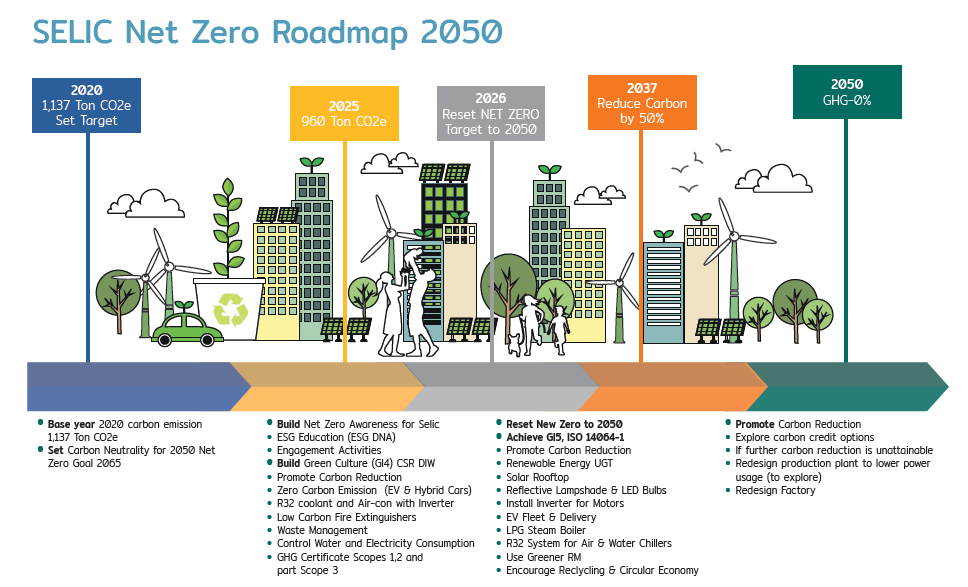
The Company acknowledges the significance of climate change issues and emphasizes preparedness in addressing continuously evolving environmental regulations and requirements, which could potentially affect the company's business operations and stakeholders across the entire value chain. Consequently, the company has established guidelines for improving and elevating environmental management, with a focus on the systematic and continuous management and reduction of greenhouse gas emissions.
The Company prioritizes the reduction of greenhouse gas emissions from all business activities, encompassing both direct and indirect emissions. Consequently, a concrete greenhouse gas reduction plan was established in 2025, with a short-term target to reduce greenhouse gas emissions by at least 50% and achieve Carbon Neutrality by 2037. Concurrently, the company has set a long-term target to reduce greenhouse gas emissions by at least 90% by 2065, aiming towards Net Zero greenhouse gas emissions from all organizational activities.
GHG — Emissions
GHG Emissions
| Metric | Current Year | Previous Year | Two Years Ago |
|---|---|---|---|
| Total GHG emissions (Metric tonnes of carbon dioxide equivalent) | 9,687 | 10,089 | 9,397 |
| Total greenhouse gas emissions 1 (Metric tonnes of carbon dioxide equivalent) | 447 | 418 | 396 |
| Total greenhouse gas emissions 2 (Metric tonnes of carbon dioxide equivalent) | 505 | 543 | 544 |
| Total greenhouse gas emissions 3 (Metric tonnes of carbon dioxide equivalent) | 8,735 | 9,128 | 8,457 |
GHG — Emissions Verification
Emissions Verified by a Third Party
Yes
Verifying Body
2645
Verification Document Link
https://eonemedia.setlink.set.or.th/report/1333/2025/1774308410962.pdf
Verification Web Page
https://thaicarbonlabel.tgo.or.th/index.php?lang=TH&mod=YjNKbllXNXBlbUYwYVc5dVgyRndjSEp2ZG1Gcw&action=WkdWMFlXbHM¶m=TWpreE1qYz0
GHG — Principles & Standards
Principles & Standards Applied
| Standard |
|---|
| 2671 |
GHG — Targets
Has Set GHG Targets
Yes
GHG Targets — Net Zero
Net Zero Targets
| Emission Scope | Base Year | Base Year Emissions | Near-term Target Year | Near-term Target Value | Near-term Target Change (%) | Long-term Target Year | Long-term Target Value | Long-term Target Change (%) | Target Year | Target Year Emissions | Target Change (%) | Unit |
|---|---|---|---|---|---|---|---|---|---|---|---|---|
| 2715 | 2,020 | 1,137 | 2,037 | 569 | 50 | 2,050 | 1,024 | 90 | 2,037 | 569 | 50 | Metric tonnes of carbon dioxide equivalent |
GHG Targets — Carbon Neutrality
Carbon Neutrality Targets
| Emission Scope | Carbon Neutrality Certified | Base Year | Base Year Emissions | Target Year | Target Year Emissions | Target Change (%) | Unit |
|---|---|---|---|---|---|---|---|
| 2715 | N | 2,020 | 1,137 | 2,037 | 569 | 50 | Metric tonnes of carbon dioxide equivalent |
GHG Targets — Other Targets
Other GHG Targets
| Emission Scope | Base Year | Base Year Emissions | Near-term Target Year | Near-term Target Value | Near-term Target Change (%) | Target Year | Target Year Emissions | Target Change (%) | Unit |
|---|---|---|---|---|---|---|---|---|---|
| 2715 | 2,020 | 1,137 | 2,026 | 114 | 10 | 2,026 | 114 | 10 | Metric tonnes of carbon dioxide equivalent |
GHG — Performance & Outcomes
Has Performance Results
Yes
Performance Description
Efficient energy and resource management plan to reduce greenhouse gas emissions (Scope 1 and Scope 2).
The Company has implemented efficient energy and resource management projects, focusing on reducing greenhouse gas emissions in Scope 1 and Scope 2 by promoting the concrete participation of employees from all departments in environmental protection activities. The key operational guidelines are as follows:
Promote and campaign for awareness in efficient resource utilization to reduce the consumption of paper, water, and electricity, as well as drive process efficiency improvement projects to enhance energy efficiency and minimize waste generated from operational processes.
Campaign and educate within the organization on proper waste disposal and segregation to reduce waste volume in each department, as well as participate in projects or activities with external environmental agencies, such as seminars to develop efficient waste data management.
Communicate and foster understanding of sustainability policies among partners and customers to promote environmental collaboration throughout the value chain.
Supervise and monitor operations to ensure they align with established targets, thereby preventing environmental complaints from both internal and external stakeholders.
Organize projects and activities that promote the reuse or recycling of waste, including activities covering safety, occupational health, environment, and energy, such as Innovation Day activities.
Registration and Management Project Plan with the Thailand Greenhouse Gas Management Organization (TGO).
The Company recognizes the importance of climate change issues and prioritizes preparedness for continuously evolving environmental regulations and requirements, which may impact the company's business operations and stakeholders throughout the value chain. Therefore, the company has established guidelines for improving and enhancing environmental management, focusing on systematic and continuous management and reduction of greenhouse gas emissions.
The Company has collected, verified, and assessed greenhouse gas emission data from various organizational activities, covering all three scopes of greenhouse gas emissions: Scope 1 (direct greenhouse gas emissions from organizational activities), Scope 2 (indirect greenhouse gas emissions from energy consumption), and Scope 3 (other indirect greenhouse gas emissions in the value chain). This data serves as a fundamental basis for establishing effective guidelines, measures, and targets for the organization's greenhouse gas reduction.
From the collection and analysis of greenhouse gas emission sources, the company has used this data as a basis for setting greenhouse gas reduction targets. The goal is to reduce the rate of greenhouse gas emissions per total production in Scope 1 and Scope 2 by 10% by 2026, compared to the base year 2020, which had greenhouse gas emissions of 1,137 tons of carbon dioxide equivalent.
In 2025, the Company successfully reduced greenhouse gas emissions in Scope 1 and Scope 2 to 952 tons of carbon dioxide equivalent, reflecting continuous progress in implementing greenhouse gas reduction measures and aligning with established targets.
Additionally, the Company has prepared an organizational greenhouse gas emission report, covering all three scopes of greenhouse gas emissions (Scope 1, Scope 2, and Scope 3), and has had its organizational greenhouse gas emission data for 2025 verified by ECEE Company Limited to ensure the credibility and accuracy of the data. The Company utilized the verification results to apply for certification and registration of its Carbon Footprint of Organization (CFO) with the Thailand Greenhouse Gas Management Organization (Public Organization) during the 1st consideration of 2026 on March 5, 2026, and was granted certification, with the results announced on March 18, 2026.
Low Emission Support Scheme (LESS Project)
The Company prioritizes participation in greenhouse gas reduction and has joined the Low Emission Support Scheme (LESS), organized by the Thailand Greenhouse Gas Management Organization (Public Organization), to support, promote, and certify the tangible and verifiable results of the organization's greenhouse gas reduction activities.
The LESS project aims to encourage organizations to undertake activities that can reduce greenhouse gas emissions and evaluate the results of these reductions according to established criteria. The Company has continuously participated in this project during 2023–2025, and the evaluation results show that greenhouse gas emissions have been reduced as follows:
In 2023, greenhouse gas emissions were reduced by 44.141 tons of carbon dioxide equivalent.
In 2024, greenhouse gas emissions were reduced by 37.134 tons of carbon dioxide equivalent.
In 2025, greenhouse gas emissions were reduced by 42.161 tons of carbon dioxide equivalent.
Environmental Legal Incidents
Legal Violation Incidents
| Metric | Current Year | Previous Year | Two Years Ago |
|---|---|---|---|
| Number of cases or incidents of legal violations or negative environmental impact (cases) | 0 | 0 | 0 |
Other Environmental Management
Plan Description
Air Pollution Management
The Company prioritizes the control and prevention of air pollution that may arise from various production processes and activities, both direct and indirect. This is to ensure that operations comply with relevant laws and regulations, as well as to minimize impacts on the environment, ecosystems, workers, and surrounding communities.
Air Pollution Targets and Management
The Company has clearly defined air pollution management targets to enhance the control of environmental impacts from its operations. It aims to strictly control and maintain air pollution levels within the standards set by government agencies and continuously monitors compliance with relevant regulations.
The Company regularly conducts air quality measurements from various activities, employing certified external agencies to ensure the transparency, accuracy, and reliability of the data.
Measurements cover particulate matter, Volatile Organic Compounds (VOCs), and other relevant parameters as required by law. The results of measurements from 2021 – 2025 consistently show that air pollution levels are within the standards set by government agencies.
Activities to Reduce Air Pollution Emissions
The Company's operational processes may generate air pollution in the form of odors, particulate matter, and contaminants discharged from ventilation stacks. Therefore, the company prioritizes systematic control and prevention of these impacts to avoid affecting workers and surrounding communities.
The company has implemented measures to control odors and pollution from production processes by designing the processes to be Closed System as much as possible to reduce the dispersion of odors and contaminants to the outside, as well as to minimize the chance of leakage during the production process.
Furthermore, the company prioritizes regular maintenance of machinery and equipment that are sources of air pollution to ensure efficient operation and minimize pollution levels. It also installs appropriate air pollution control systems, including:
Mixing tanks with lids to reduce evaporation and odor dispersion.
Ventilation systems designed according to engineering principles to control air flow direction.
Standardized ventilation stacks to appropriately control and disperse air discharge.
The Company consistently conducts air quality measurements both in operational areas and at ventilation stacks. The measurement results consistently comply with relevant legal requirements.
Employees — Plan & Guidelines
Has an Employee Management Plan
Yes
Plan Description
Fair Employee Compensation
The Company has a policy of fair salary-based compensation for employees, setting wage rates no lower than legally mandated and benchmarking them against similar industry wage levels. Additionally, the Company provides non-salary compensation, such as skill-based pay and compensation based on the responsibility level of each position.
The Company treats all employees fairly and equally, conducting performance planning & review and evaluating operational results based on organizational key performance indicators (KPIs) to inform appropriate compensation reviews. The objective of compensation review is to retain and incentivize employees with good performance, capabilities, and dedication to the organization.
The Company's compensation considerations do not involve discrimination or gender differentiation and are strictly conducted within the legal framework of the Labor Protection Act B.E. 2541 (1998), as well as other relevant laws and regulations.
Training
The Company is committed to developing high-quality personnel with integrity, ethics, and a strong commitment to honesty. It promotes shared organizational values (Core Competency) among all employees and mandates compulsory training courses for all employees to foster a common understanding and consistent operational guidelines across the organization.
Furthermore, the Company emphasizes developing employee competencies in all dimensions, including knowledge competency, skill competency, and promoting innovative thinking, through both internal and external training, as well as on-the-job training (OJT). The aim is to encourage employees to recognize sustainable development to support business expansion and enhance the organization's competitiveness.
Personnel Development
The Company has a policy to prepare a succession plan to accommodate potential situations or changes that may affect business operations. This is to strengthen human resource stability and ensure that the Company's operations can continuously achieve its set goals, while minimizing potential damages or risks.
The Company has developed a workforce succession plan and a succession planning framework, with the following operational guidelines:
Establish appropriate advance notice periods for employee resignations, requiring employees to give at least 30 days' notice, and at least 60 days' notice for executive positions, to allow the Company sufficient time to recruit and prepare replacement personnel.
Define competencies for key positions and management-level positions to serve as guidelines for selecting and developing personnel with succession potential.
Conduct performance evaluations based on the competency characteristics of each position and utilize the evaluation results as data for developing a succession plan to prepare for future position inheritances.
Identify high-potential employee groups (Talent Pool) and develop Individual Development Plans (IDPs) to systematically plan career advancement paths.
Develop a personnel development plan to prepare for succession, designing the development plan to align with the capabilities and requirements of the position to be succeeded.
Provide training and development in leadership skills and related competencies to enhance employees' potential and readiness for advancing to supervisory, line management, and senior executive positions in the future.
Promoting Employee Relations and Engagement
The Company prioritizes fostering good relationships and employee engagement at all levels by providing basic welfare and benefits as required by law, as well as additional benefits beyond legal requirements. This is based on principles of fairness, non-discrimination, and consideration for the appropriateness of duties and responsibilities of each position.
Welfare and activities provided by the Company include annual health check-ups and risk-based health screenings, accident and health insurance, employee welfare loan funds, employee uniforms, special assistance funds, provident funds, as well as internal relationship-building activities such as annual parties, birthday merit-making events, and monthly lunch gatherings, all of which foster a positive working atmosphere and employee loyalty to the organization.
In addition, the Company has established an Employee Joint Investment Program (EJIP) to incentivize performance and foster a sense of ownership among employees, management, and directors of the company, thereby strengthening long-term employee engagement and commitment.
Migrant Workers / Foreign Workers
The Company prioritizes the legal employment and management of migrant workers, adhering to human rights principles and treating workers fairly without discrimination in terms of wages, welfare, safety, and working environment. It also promotes equal access for migrant workers to information, rights, and various protection mechanisms.
The Company fully and legally employs and registers migrant workers, who receive wages, welfare, and protection under labor laws equally with Thai workers. Additionally, the Company provides training on workplace safety and labor rights in languages understandable to the workers, to enhance their knowledge, understanding, and awareness of their rights and duties appropriately.
Child Labor
The Company is committed to respecting human rights and strictly adhering to labor laws. It has established a policy against child labor at all stages of business operations, including throughout the organization's supply chain. Furthermore, it implements measures for inspection, prevention, and awareness-raising among relevant parties to ensure that employment practices are correct, appropriate, and do not negatively impact the rights, development, and education of young people.
The Company hereby affirms its non-use of child labor in its business activities, strictly adhering to labor laws and standards related to child labor. It has a systematic age and employment document verification process before employment and communicates its no-child-labor policy to employees, partners, and contractors to ensure consistent practices throughout the supply chain.
Safety, Occupational Health, and Working Environment
The Company prioritizes safety, occupational health, and working environment as a primary concern in its business operations. This covers personnel at all levels within the organization, including employees, contractors, and external individuals working within the Company's premises, which is considered a key material issue for stakeholders.
The Company has established policies and operational guidelines for safety, occupational health, and working environment, strictly adhering to the ISO 45001:2018 standard system. This includes policy formulation, establishment of a Safety, Occupational Health, and Working Environment Committee, definition of safety management structures, occupational health and safety risk management, and various activities to promote and instill a sustainable safety culture within the organization.
Furthermore, the Company places the highest importance on the safety and occupational health of all employees and workers. It is committed to creating a safe working environment, reducing the risk of accidents and work-related illnesses through strict adherence to safety and occupational health laws and standards, and promoting employee participation at all organizational levels.
To ensure effective safety and occupational health operations, the Company has established the following key guidelines and measures:
Fully comply with safety and occupational health laws and standards.
Ensure all employees and workers receive regular safety and occupational health training appropriate to their job nature.
Conduct risk assessments and establish appropriate preventive measures in all work areas to reduce the likelihood of accidents and work-related illnesses.
Promote the reporting of incidents and near misses to use as data for continuous improvement and development of the safety system.
Plan Areas
| Plan Area |
|---|
| Fair employee compensation |
| Employee training and development |
| Promoting employee relations and participation |
| Migrant/foreign labor |
| Child labor |
| Occupational health and safety in workplace |
Employees — Workforce
Introduction
As of December 31, 2025, the Company had a total of 132 employees, including 1 employee with disabilities, and a male-to-female employee ratio of 58 : 42.
Workforce Data
| Metric | Current Year | Previous Year | Two Years Ago |
|---|---|---|---|
| Total number of employees (Persons) | 132 | 130 | 124 |
| Number of male employees (Persons) | 77 | 73 | 68 |
| Number of female employees (Persons) | 55 | 57 | 56 |
| Total employment of disabled persons (people) | 1 | 1 | 1 |
| Total disabled employees (people) | 1 | 1 | 1 |
| Total male disabled employees (people) | 0 | 0 | 1 |
| Total female disabled employees (people) | 1 | 1 | 0 |
| Total disabled workers who are non-employee (people) | 0 | 0 | 0 |
| Contributions to the fund for promoting and improving the quality of life for disabled persons | 0 | 0 | 0 |
| Total number of male employees in operational level (Persons) | 63 | 60 | 59 |
| Total number of male employees in management level (Persons) | 11 | 11 | 8 |
| Total number of male employees in executive level (Persons) | 3 | 2 | 1 |
| Total number of female employees in operational level (Persons) | 44 | 49 | 46 |
| Total number of female employees in management level (Persons) | 10 | 6 | 7 |
| Total number of female employees in executive level (Persons) | 1 | 2 | 3 |
Employees — Remuneration & Provident Fund
Introduction
The Company has appropriately compensated its employees, including salaries, overtime pay, cost of living allowances, bonuses, special allowances, as well as various benefits such as social security contributions, provident fund contributions, and the Employee Joint Investment Program (EJIP).
In the year 2025, The ratio of male employee compensation to female employee compensation is equal to 55 : 45
Remuneration & Provident Fund
| Metric | Current Year | Previous Year | Two Years Ago |
|---|---|---|---|
| Total disabled employees (people) | 83,171,266.93 | 84,365,792.57 | 75,205,777.53 |
| Total male employee remuneration (Baht) | 46,193,589.19 | 37,305,826.56 | 32,189,485.13 |
| Total female employee remuneration (Baht) | 36,977,677.74 | 47,059,966.01 | 43,016,292.4 |
| Number of employees eligible to participate in PVD (persons) | 125 | 114 | 114 |
| Total number of employees joining employee provident fund (Persons) | 113 | 95 | 86 |
| Percentage of total number of employees joining employee provident fund to total number of employees (%) | 85.61 | 73.08 | 69.35 |
| Number of PVD members / Total eligible employees (%) | 90.4 | 83.33 | 75.44 |
| Total amount of provident fund contributed by the Company (Baht) | 2,930,774.3 | 2,751,259.73 | 1,814,894.44 |
| Total amount of provident fund contributed by employee (baht) | 3,053,362.48 | 3,065,123.73 | 2,532,565.05 |
Employees — Training & Development
Training Data
| Metric | Current Year | Previous Year | Two Years Ago |
|---|---|---|---|
| Average employee training hours (Hours / Person / Year) | 33.08 | 20.61 | 0 |
| Employee development and training expenses (baht) | 220,114.95 | 191,845 | 236,369.63 |
Employees — Occupational Health & Safety
Occupational Health & Safety Data
| Metric | Current Year | Previous Year | Two Years Ago |
|---|---|---|---|
| Total number of lost time injury incidents by employees (Cases) | 2 | 0 | 1 |
Employees — Labour Relations
Labour Relations Data
| Metric | Current Year | Previous Year | Two Years Ago |
|---|---|---|---|
| Total voluntary resignations (Persons) | 34 | 42 | 58 |
| Male employees who voluntary resigned (Persons) | 24 | 30 | 37 |
| Female employees who voluntary resigned (Persons) | 10 | 12 | 21 |
| Percentage of employee turnover leaving the Company voluntarily (%) | 25.76 | 32.31 | 46.77 |
| Evaluation result of employee engagement | 1 | 1 | 1 |
Employees — Employee Representation
Employees Are Represented Collectively
Yes
Forms of Representation
| Form |
|---|
| Welfare committee |
Employees — Targets
Has Set Employee Targets
Yes
Targets
| Indicator | Target Areas | Target Year | Target Year — Description |
|---|---|---|---|
| 100% payment of wages and compensation not less than legally prescribed. | 2983 · Description: Fair employee compensation | 2,025 | Payment of wages and remuneration not less than legally prescribed. |
| Average training hours per person per year | 2984 · Description: Employee training and development | 2,025 | Average training hours: 20 hours per person per year. |
| Foreign workers are legally employed and registered. | 2986 · Description: Migrant/foreign labor | 2,025 | Foreign workers are 100% legally employed and registered. |
| No child labor in the company's business activities | 2987 · Description: Child labor | 2,025 | 100% non-use of child labor in the company's business activities. |
| Compliance with Safety and Occupational Health Laws and Standards | 2988 · Description: Safety and occupational health at work | 2,025 | Full compliance with safety and occupational health laws and standards |
| Employee Engagement Assessment Results | 2990 · Other name: Organizational Commitment · Description: Others | 2,025 | Employee engagement assessment results: 85% |
Employees — Performance & Outcomes
Has Performance Results
Yes
Performance Description
Employee Training and Development
The Company is committed to developing high-quality personnel with integrity, ethics, and honesty. It promotes shared organizational values (Core Competency) among all employees and mandates compulsory training courses for all employees to foster a unified understanding and operational approach across the organization. The mandatory courses include:
Business Ethics (Code of Conduct)
Code of Conduct for Directors, Executives, and Employees
Anti-Corruption Policy and Guidelines (Anti-Corruption Policy / CAC)
Basic knowledge of personal data protection under the Personal Data Protection Act (
Knowledge of Safety, Occupational Health, and Prevention of Work-Related Diseases (Safety & Occupational Health)
Additionally, the Company emphasizes developing employee competencies in all dimensions, including knowledge competency, skill competency, and fostering an innovation mindset, through both internal and external training, as well as On-the-Job Training (OJT). The focus is on making employees aware of sustainable development to support business expansion and enhance the organization's competitiveness.
Employees at all levels receive appropriate and continuous training and development to enhance essential skills for business operations and career growth. The Company consistently provides an average training hour per employee and supports learning through diverse and accessible formats. In 2025, employees received an average of 33.08 training hours per person per year.
ESG DNA Project: Sustainability Knowledge Series
In 2025, the Company participated in the ESG DNA project, a sustainability knowledge series in the form of e-learning provided by the Stock Exchange of Thailand. This initiative aims to enhance the understanding of ESG business principles among personnel at all levels within the organization and to instill a sustainability mindset that can be applied to the operations of each department and throughout all stages of business, thereby contributing to the organization's sustainable growth.
The Company requires all employees participating in the project to undergo training and pass tests according to the prescribed mandatory courses. A total of 129 employees participated in the ESG DNA project, which comprises four mandatory courses, namely:
ESG 101: ESG in Action
CE 201: Business Operations based on Circular Economy Principles
S02_1: Value Chain Analysis
ESG 201: ESG Risk Management
Promoting Employee Relations and Engagement
The Company provides welfare and activities such as annual health check-ups and risk-based health screenings, accident and health insurance, an employee welfare loan fund, employee uniforms, special assistance payments, a provident fund, as well as internal relationship-building activities like annual parties, birthday merit-making events, and monthly lunch gatherings, all of which foster a positive work environment and employee engagement.
Additionally, the Company has established an Employee Joint Investment Program (EJIP) to incentivize performance and foster a sense of ownership among employees, management, and directors, thereby strengthening long-term employee engagement and participation.
Employee Engagement
The Company is committed to fostering employee engagement and promoting good relationships among personnel. Since 2021, an employee engagement survey has been conducted to assess the level of employee commitment to the organization and to identify strengths and opportunities for organizational development from the employees' perspective, which will lead to increased employee participation and an improved work environment. The Company has assigned an external firm specializing in organizational engagement to conduct the survey. The results of the 2022 survey will serve as the baseline year*, and employee engagement targets have been set as key performance indicators for subsequent years.
The Company regularly conducts Employee Engagement Surveys to assess employee satisfaction, engagement, and attitudes towards the organization, and uses the survey results as data to guide the development and improvement of human resource management.
In 2025, the Company set an employee engagement score target of no less than 85%. Previous survey results indicate a good level of employee engagement. However, to strengthen human resource management and support the organization's long-term sustainability, the Company is continuously developing strategies and implementing measures to enhance the employee experience and create an environment conducive to sustainable employee participation, engagement, and growth at all organizational levels.
Employee Engagement Assessment Results | Target | 2022 | 2023 | 2024 | 2025 |
SELIC | 85% | 40% | 47% | 81.2% | 82.0% |
Industrial Group in Asia Pacific | N/A | 60% | 69% | 82.4% | 80.8% |
Migrant/foreign workers and child labor
In 2025, the Company reported no cases of human rights violations or complaints, including those related to migrant/foreign workers and child labor.
Certifications and Awards Received
The Company has received certifications and awards in labor, safety, and human resource management, reflecting its commitment to conducting business responsibly towards employees and all stakeholders. Key awards and certifications include:
Thai Labour Standard Certification (TLS 8001-2020)
National Outstanding Establishment Award for Safety and Occupational Health (Thailand Safety Award) for the year 2025 by the Ministry of Labour
Safety, Occupational Health, and Working Environment
The Company has communicated its Safety, Occupational Health, and Working Environment policy throughout the organization and provides employee training to ensure the correct and efficient application of QSHE management systems. Furthermore, the Company regularly reviews its organizational objectives to ensure that the policy is continuously updated and developed in alignment with its operations and goals.
Additionally, the Company has established a systematic organizational structure and safety plan, appointing a Safety, Occupational Health, and Working Environment Committee to oversee and take primary responsibility for the organization's safety. Representatives from all departments participate as safety practitioners to supervise and promote safe working practices among employees.
Number of safety officers and individuals requiring training under the Safety Act | |||||||||
Courses/ year | Safety Officer (Management Level) | Safety Officer (Supervisor Level) | Professional Safety Officer | Safety Committee | Compliance Officer | Control staff Crane | Control staff Steam | Gas station control staff | Forklift driver |
2021 | 13 | 17 | 1 | 9 | 1 | 13 | 3 | 2 | 3 |
2022 | 14 | 17 | 1 | 7 | 1 | 13 | 3 | 2 | 9 |
2023 | 14 | 17 | 1 | 7 | 1 | 11 | 3 | 3 | 10 |
2024 | 17 | 15 | 1 | 7 | 1 | 11 | 3 | 3 | 11 |
2025 | 10 | 18 | 1 | 7 | 2 | 20 | 3 | 3 | 10 |
The Company has established safety regulations and procedures, provided appropriate personal protective equipment (PPE) to employees, recommended safety measures, and implemented corrective actions when risks or hazardous conditions are identified. This covers employees, contractors, and external personnel working within the Company's premises, while continuously promoting and supporting safety activities to foster a sustainable safety culture within the organization.
Employee Accident Report 2021 - 2025 | |||||
Past 5 years | 2021 | 2022 | 2023 | 2024 | 2025 |
Total number of work-related accidents | 2 | 3 | 2 | 1 | 2 |
Number of work-related accidents resulting in lost time | 1 | 3 | 2 | 0 | 2 |
Lost Time Injury Frequency Rate (LTIFR) statistics | 0.63 | 1.88 | 1.43 | 0.74 | 1.74 |
Lost Time Injury Severity Rate (LTISR) statistics | 1.25 | 11.90 | 7.56 | 0 | 5.21 |
Contractor and Partner Accident Report 2021 - 2025 | |||||
Past 5 years | 2021 | 2022 | 2023 | 2024 | 2025 |
Total number of work-related accidents | 0 | 0 | 0 | 0 | 0 |
Number of work-related accidents resulting in lost time | 0 | 0 | 0 | 0 | 0 |
Lost Time Injury Frequency Rate (LTIFR) statistics | 0 | 0 | 0 | 0 | 0 |
Lost Time Injury Severity Rate (LTISR) statistics | 0 | 0 | 0 | 0 | 0 |
The Company manages and monitors performance at least twice a year in accordance with its objectives for safety, occupational health, and working environment. The assessments are conducted by personnel with relevant knowledge, expertise, and experience, who have also undergone training in ISO 45001 assessment standards. The assessment results and the company's long-term goals are detailed as follows:
System Development Plan and Goals for Safety, Occupational Health, and Working Environment Development | ||||
2021 | 2022 | 2023 | 2024 | 2025 |
Surveillance Audit for system certification To maintain continuous certification | 3-year certification renewal surveillance audit To maintain continuous certification | Surveillance Audit for system certification To maintain continuous certification | Surveillance Audit for system certification To maintain continuous certification | 3-year certification renewal surveillance audit To maintain continuous certification |
3-year certification renewal audit (Re-Certification) | Review, revise, and assess risks to cover all activities | Review, revise, and assess risks to cover all activities | Foster an organizational safety culture | 3-year certification renewal audit (Re-Certification) |
System renaming | Promote occupational health and safety participation at all organizational levels | Promote occupational health and safety participation at all organizational levels | Striving for the establishment award Zero Accident | Striving for the establishment award Zero Accident |
Maintain the standard of the National Outstanding Safety Establishment Award | Maintain the standard of the National Outstanding Safety Establishment Award | Maintain the standard of the National Outstanding Safety Establishment Award | Maintain the standard of the National Outstanding Safety Establishment Award | Maintain the standard of the National Outstanding Safety Establishment Award |
Customers — Plan & Guidelines
Has a Customer Management Plan
Yes
Plan Description
Responsibility to Customers
The aforementioned operations aim to create added value for products and services, deliver high-quality, safe, and standardized products, and effectively meet the needs and expectations of all customer and stakeholder groups, in line with responsible, transparent, and sustainable business practices in the long term.
Communication of Product Impact Information to Customers
The Company has policies and practices for communicating information related to the impacts of products and services comprehensively, transparently, and accurately, to enable customers, users, and consumers to use products safely and appropriately. The Company clearly displays necessary information on product labels, such as usage instructions, storage guidelines, and warning symbols in cases where products may be hazardous, in accordance with the international standards of the Globally Harmonized System (GHS) for the classification and labeling of chemicals.
In addition, the Company prepares Product Safety Data Sheets (SDS) to provide safety information to users, covering proper handling guidelines, and management of spills, accidents, or emergencies that may arise from product use.
To ensure customers have comprehensive and convenient access to information, the Company has established various communication channels, including document delivery via email, providing information through telephone channels as specified in SDS documents, disseminating information via the Company's website, and offering consultation by a team of specialized technical experts who are ready to provide advice, resolve usage issues, and answer customer inquiries quickly and efficiently.
Customer Relationship Management
The Company adheres to the principle of customer-centric sales and services, which is a core aspect of its operations. It aims to deliver products and services that effectively and efficiently meet customer needs, while creating positive customer experiences across all customer touch points.
To enhance the efficiency of customer care and relationship management, the Company has adopted Marketing Technology (MarTech) to support the sales team's operations, enabling them to access customer data, analyze needs, and respond quickly and precisely.
The Company's team comprises specialized experts ready to provide technical advice and support to ensure customers are confident in selecting and using products correctly and appropriately. Furthermore, the Company emphasizes close post-sales usage monitoring to prevent issues that might affect customers' production processes, and continuously provides training and technical knowledge transfer to customer employees to enhance usage efficiency and long-term satisfaction.
Protection of Customer Personal Data
The Company places utmost importance on the protection and safeguarding of customer personal data. It collects, uses, discloses, and processes personal data responsibly, transparently, and in accordance with relevant laws, particularly the Personal Data Protection Act B.E. 2562 (2019) (PDPA), as well as accepted data security standards and practices.
The Company clearly defines personal data protection policies and measures, covering the establishment of access rights, usage control, and prevention of unauthorized access, modification, or disclosure of data. It also implements appropriate technical and administrative measures to maintain data security.
Furthermore, the Company consistently promotes awareness of personal data protection among employees at all levels through mandatory training (PDPA) and provides contact channels for complaints or inquiries to build customer confidence and trust.
Plan Areas
| Plan Area |
|---|
| Responsible production and services for customers |
| Communication of product and service impacts to customers/consumers |
| Development of customer satisfaction and customer relationship |
| Protection of customer personal information |
Customers — Satisfaction Results
Introduction
Customer satisfaction survey results across all aspects consistently scored above the set target of 85 percent, reflecting the company's operational efficiency and service quality.
In 2025, the quality and standards of products, as well as delivery services, showed a clear upward trend, indicating continuous improvement in product quality and logistics efficiency. Meanwhile, sales and technical services consistently received high scores, reflecting customer confidence in the company's services and technical support.
Additionally, in 2025, the Company introduced an environmental and safety management assessment for the first time and achieved an assessment score of 88.75 percent, which exceeded the set target, reflecting customer confidence in its responsible and sustainability-oriented business practices.
The Company has utilized customer satisfaction survey results as crucial data for continuous improvement and development of product quality, services, and operational processes to enhance customer satisfaction, trust, and long-term relationships.
Customer Satisfaction Results
| Metric | Current Year | Previous Year | Two Years Ago |
|---|---|---|---|
| Evaluation results of customer satisfaction | 1 | 1 | 1 |
Customers — Targets
Has Set Customer Targets
Yes
Targets
| Indicator | Target Areas | Target Year | Target Year — Description |
|---|---|---|---|
| Customer satisfaction assessment results exceeding 85% | 3009 · Description: Development of customer satisfaction and customer relationship | 2,025 | Customer satisfaction assessment results exceeding 85% |
Customers — Performance & Outcomes
Has Performance Results
Yes
Performance Description
Customer Satisfaction Survey
The Company conducts customer satisfaction surveys twice a year to assess operational quality and continuously utilize the results for product and service improvement and development. In 2025, the Company added environmental and safety management assessment topics to align with sustainable business practices.
Customer satisfaction assessment topics consist of 4 main areas as follows:
Product Quality and Standards
Product quality and usability meet specified standards.
Packaging quality and product quantity are accurate according to specified standards.
Product Delivery Services
Product delivery is on schedule and quantities are accurate according to the purchase order.
Delivery services comply with customer requirements and needs.
Sales and Technical Services
Speed and accuracy in order processing and customer response
Technical assistance and problem-solving capabilities
Product development and responsiveness to customer needs
Environmental and Safety Management
Operations are conducted with appropriate personal protective equipment (PPE).
Emergency situation management, such as chemical spills, to prevent and mitigate environmental impacts on customers.
Cooperation in environmental and safety management operations according to specified measures to prevent environmental and safety issues for customers.
Customer Satisfaction Survey Results
The Company continuously conducts customer satisfaction surveys, setting a target evaluation score of no less than 85% in all categories to reflect product quality, service efficiency, and sustainable business operations. The evaluation results for the period 2023–2025 are summarized in the following table:
Survey Topics | Target (%) | 2023 | 2024 | 2025 |
Product Quality and Standards | 85% | 92.20% | 91.38% | 94.16% |
Delivery Services | 85% | 89.20% | 90.53% | 94.77% |
Sales and Technical Services | 85% | 89.60% | 91.10% | 92.12% |
Environmental and Safety Management | 85% | – | – | 88.75% |
Community & Social — Plan & Guidelines
Has a Community & Social Plan
Yes
Plan Description
The Company aims to sustainably contribute to improving the quality of life in communities. It focuses on applying the group's innovation and expertise to transfer knowledge through projects and activities that create value for society. The Company aims to promote good health in communities alongside economic development in the surrounding areas, enabling people to be self-reliant, have stable and sustainable careers, and possess knowledge for self-care and family health, as well as being able to further develop this knowledge into future professions.
The Company continuously promotes social engagement and involvement with surrounding communities, through organizing activities, providing financial support, donating items, and applying the Company's knowledge and innovations for beneficial purposes to assist personnel within the organization, surrounding communities, and society as a whole. The Company has conducted social activities both independently and under the CSR-DIW project of the Department of Industrial Works, having commenced its participation in this project since 2025.
Furthermore, the Company also prioritizes building and maintaining good relationships with surrounding communities, demonstrating its role as a part of society and its responsibility towards the community. This is achieved through on-site visits to communities or by inviting community representatives to meet and discuss with company representatives to exchange opinions, listen to local issues, and collaboratively find appropriate solutions.
Plan Areas
| Plan Area |
|---|
| Employment and professional skill development |
| Education |
| Occupational health, safety, health, and quality of life |
| Disadvantaged and vulnerable groups |
Community & Social — Targets
Has Set Community & Social Targets
Yes
Targets
| Indicator | Target Areas | Target Year | Target Year — Description |
|---|---|---|---|
| No complaints from the community. | 3045 · Other name: Community complaints · Description: Others | 2,025 | Community complaints are zero |
Community & Social — Performance & Outcomes
Has Performance Results
Yes
Performance Description
Community Development Participation
The company prioritizes maintaining good relationships with surrounding communities and demonstrates its role as an integral part of society alongside its public responsibility. This involves regular visits to communities and inviting community members from areas around the factory to meet with company representatives to exchange opinions, listen to local issues, and discuss appropriate ways the company can provide support.
On July 25, 2025, the meeting jointly resolved to propose that the Company support waste management and segregation in the alley next to the factory to improve the environment and enhance the quality of life for surrounding communities. The company plans to commence this project in 2026, assigning company representatives to coordinate and closely collaborate with the community on its implementation.
Regarding activities under the CSR-DIW project, the Company held a seminar with Nong Khaem Community, Soi Ton Son, on August 6, 2025, to gather information from the community for community engagement and development activities. It also provided an opportunity for the community to express opinions and concerns that might arise from the Company's operations, enabling the company to improve and develop operational guidelines that appropriately align with the needs of the area.
Community Enterprise Development towards Digital Marketing Project
Nong Khaem Community, Soi Ton Son, is an agricultural community that has formed the Nong Khaem Jumpee Growers Community Enterprise Group, led by the group's founder. He conceived the idea of increasing the value of Jumpee produce by extending it to extract essential oil and developing it into a product named "Jumpee Perfume." This is achieved using a distillation machine adapted from local wisdom, reflecting the integration of local knowledge with product development to generate income and sustainability for the community.
Regarding activities under the CSR-DIW project, the company held a seminar with Nong Khaem Community, Soi Ton Son, on August 6, 2025, to gather information and suggestions from the community for appropriate planning and implementation of community engagement and development activities. It also provided an opportunity for the community to express opinions and concerns that might be related to the company's operations, leading to improvements and development of operational guidelines that truly align with the local context and needs.
Nong Khaem Community, Soi Ton Son, is an agricultural community that has formed the Nong Khaem Jumpee Growers Community Enterprise Group, led by the group's founder. They conceived the idea of increasing the value of Jumpee produce by extending it to extract essential oil and developing it into a product named "Jumpee Perfume." This is achieved using a distillation machine adapted from local wisdom. This approach reflects the integration of local knowledge with creative product development, serving as a crucial mechanism for generating income, strengthening the economy, and driving long-term sustainability for the community.
Following the seminar, the Company conducted training under the "Community Enterprise Development towards Digital Marketing" project for 8 community representatives on August 27, 2025. This aimed to enhance knowledge and skills in digital marketing, which will help increase product distribution channels, expand customer bases, and elevate the competitive potential of community products in a broader market, thereby leading to sustainable income generation and economic strengthening.
The Company monitored the operational results after the training and found that the community enterprise was able to practically apply the acquired knowledge in product publicity and promotion, as well as concretely increase digital sales channels. Within the specified period, the community enterprise group achieved total product orders and sales amounting to 2,000 Baht, reflecting the practical application of knowledge to generate tangible results and income for the community in the initial phase.
Massage Training Course for Career Advancement and Mobile Massage Activities Project
SELIC and its group of companies aim to sustainably participate in improving the quality of life in communities. They focus on applying the group's innovation and expertise to transfer knowledge through projects and activities that create social value, including health promotion, income generation, and economic development in communities surrounding their operational areas.
The Company aims for people to be self-reliant, have stable and sustainable careers, possess knowledge in self-care and family health, and be able to further develop this knowledge into future professions. Concurrently, it seeks to continuously link community development with economic growth. The primary target groups include informal workers, unskilled individuals, the unemployed, the underprivileged, and vulnerable groups in the community.
The Company is committed to supporting project participants in continuously developing their massage skills and expertise, as well as promoting further development, leading to sustainable career opportunities. Mobile massage activities were organized to provide trainees with practical experience serving local residents.
SELIC and its group of companies initiated the "Free Spa & Wellness Massage Training Course" alongside the "Mobile Massage for the Public" activity. These are organized monthly on a rotating basis among the group companies, namely SELIC, Devakam Apothecary Hall & DVK Healthcare, and PMC, to provide opportunities for interested individuals to learn and gain practical experience.
During the activities, massage instructors provided close guidance, supervised service standards, and built confidence among participants, enabling them to develop their potential and pursue quality careers in the future.
In 2025, the group of companies implemented massage training courses and mobile massage activities to promote vocational skills, income generation, and social services. A total of 7 activities were organized, divided into 2 types:
Massage Training Project
Provided knowledge and practical training in massage to develop participants' skills, enabling them to pursue careers or generate supplementary income effectively. In 2025, a total of 4 activities were organized.Mobile Massage Activities
Organized mobile massage service units to provide services to people in various areas, promoting health and fostering good relations between the organization and the community. A total of 3 activities were conducted.
The operational details of each company are as follows:
Group of Companies | Massage Training Project | Mobile Massage Activities |
DVK / DHC | 2 times | - |
SELIC | 1 time | 2 times |
PMC | 1 time | 1 time |
Total | 4 times | 3 times |
The project received excellent cooperation and response from participants and local residents, resulting in benefits in both vocational skill development and overall community health care.
Children's Lunch Program at Srinakarin Children's Home (Slum Children's Foundation)
The Company has continuously conducted CSR in Process activities from August 2023 until 2025, organizing lunch programs and activities with children at Srinakarin Children's Home. This provides an opportunity for employees with birthdays each month to participate in the activities, sharing happiness, supporting learning development, and continuously enhancing the emotional and mental development of children.
The "Employee Birthday Lunch Sharing" activity is therefore another approach that the company is committed to continuously implementing, aiming to create smiles, warmth, and good opportunities for children in society. The activity's objective is to continuously promote learning development, build morale, and provide emotional warmth to children, while also offering employees concrete opportunities to participate in social activities.
Movement Camp...Building Good Children Project, 2nd/2025
In 2025, the Company supported the "Movement Camp...Building Good Children" Project, 2nd/2025, at Suea Yai Baby Home, organized by the Slum Children's Foundation under the Royal Patronage of Her Royal Highness Princess Galyani Vadhana Krom Luang Naradhiwas Rajanagarindra, from October 23–24, 2025.
The project aims to encourage children to love learning, exhibit good behavior, and possess a public spirit, as well as to provide opportunities for children to learn and practice skills through various activities, along with having space for creative expression. This fosters physical, emotional, social, and intellectual development appropriate for their age. This support for the project reflects the company's commitment to participating in improving the quality of life for children and youth, and supporting their quality growth.
SELIC Pan Kao Jai Project
Since 2018, SELIC has continuously initiated and operated the "Pan Kao Jai" (Sharing Adhesive Heart) project for 8 years, committed to delivering "adhesive," the company's main product, for social benefit, and aiming to continue this project annually.
Under the "Pan Kao Jai" (Sharing Adhesive Heart) project, the Company supported adhesive products for the "Blind Vocational Development Center by the Foundation for the Blind in Thailand under the Royal Patronage" to be used in fulfilling the center's objectives of creating careers and increasing opportunities for visually impaired individuals, promoting their ability to live confidently and self-reliantly in society. Additionally, the foundation used the adhesive to improve walking surfaces for the visually impaired, enhancing safety and ease of movement.
Furthermore, SELIC has also continuously implemented the "Pan Kao Jai" (Sharing Adhesive Heart) project in collaboration with the Prostheses Foundation of H.R.H. the Princess Mother since 2017. This involves supporting adhesive products for use as components in manufacturing prostheses for individuals with leg disabilities, thereby utilizing the quality of the Company's products to benefit society and enhance the quality of life for disabled individuals, enabling them to live daily lives with dignity and improved quality.
Further information can be found in the 2025 Sustainability Report of the company.
Law Violation Incidents
Law Violation Incidents
| Metric | Current Year | Previous Year | Two Years Ago |
|---|---|---|---|
| The total number of cases or incidents of significant violations of laws or regulations regarding social and human rights (Cases) | 0 | 0 | 0 |
| The total number of cases or incidents that cause significant labor disputes (Cases) | 0 | 0 | 0 |
| The total number of cases or complaints related to consumer rights violations (Cases) | 0 | 0 | 0 |
| The total number of cases or complaints related to partner rights violations (Cases) | 0 | 0 | 0 |
| The total number of cases or incidents that cause disputes with the community/society (Cases) | 0 | 0 | 0 |
| The total number of cases or incidents related to cyber security or customer data breaches (Cases) | 0 | 0 | 0 |
| The total number of cases or incidents related to safety and occupational health at work (Cases) | 0 | 0 | 0 |